

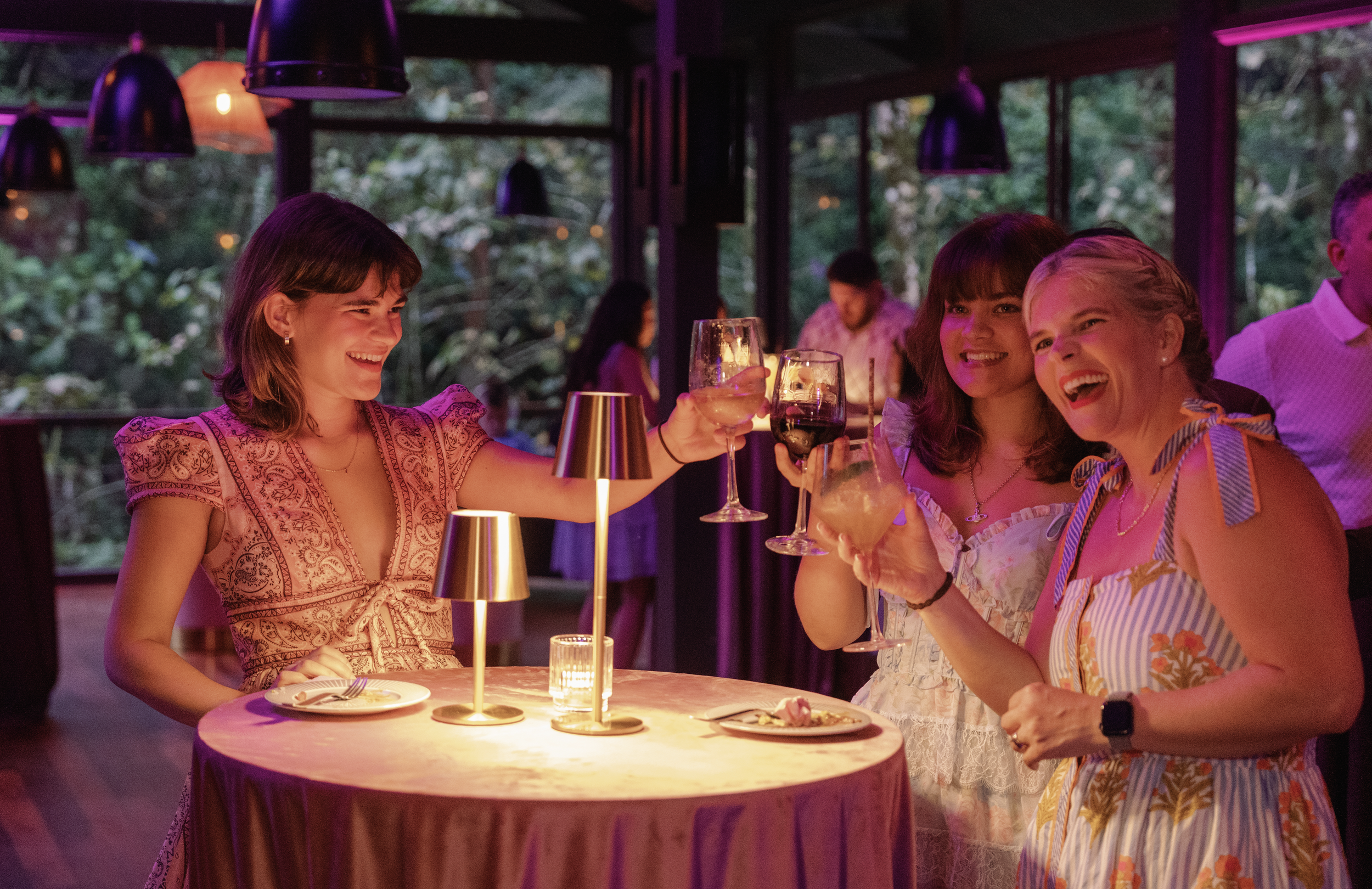
There is something special about the first evening everyone comes together for a destination wedding. Friends who have heard about each other for years finally meet. Family members settle into the trip. You look around and realize the people you love have traveled all this way to celebrate with you.
A Costa Rica wedding welcome party gives that moment a place to happen. It can be as relaxed as drinks and dinner at a favorite restaurant or as thoughtfully designed as a private gathering overlooking the ocean.
To plan yours, start with your guests' arrival schedule, choose a convenient location, set a clear hosting budget, and explain what to expect before the trip. Keep the evening comfortable and easy to enjoy, especially if guests have traveled that day.
At Jenifer Hernandez Weddings, we approach the welcome celebration as the beginning of your wedding experience. Here is how to create an evening that feels personal, welcoming, and connected to the weekend ahead.
What is a destination wedding welcome party?
A welcome party is a gathering that brings guests together before the wedding. It gives everyone a chance to reconnect, meet new people, and spend time with the couple before the wedding-day schedule begins.
It is different from a rehearsal dinner, which is usually connected to the ceremony rehearsal and may have a smaller invitation list. A welcome party commonly includes everyone attending the wedding, although the format can be flexible.
You can host a separate rehearsal dinner and welcome gathering, or combine them into one evening. If you combine them, make sure guests know which portions they are invited to and when to arrive. Clear invitations help everyone feel comfortable.
1. Decide what you want the evening to do
Before choosing decorations or a menu, consider the role this event will play in your weekend.
Would you love a relaxed dinner where your families get to know each other? A lively gathering with music and cocktails? An easy place for people to stop by after checking in?
For a wedding with 20–50 guests, one shared dinner may be a lovely way to begin. For a larger group, a mix of seating and space to mingle might make introductions easier. If guests are arriving at different times, a flexible gathering can work better than a seated meal with a fixed start.
Choose the format around how you want people to feel. You can give the welcome party its own personality while keeping the wedding day as the main celebration.
2. Plan the timing around arrivals
The evening before the wedding is a natural option, but look at actual travel plans before making it the default. Guests arriving that afternoon may still need to collect luggage, transfer to their accommodations, check in, and rest.
Ask your planner to consider arrival times alongside realistic transfers for your location. Avoid scheduling the gathering so tightly that a delayed flight means missing an entire dinner.
If most people will already be in Costa Rica, hosting two evenings before the wedding may give you more flexibility. If arrivals are spread out, an informal gathering with a clear arrival window can reduce pressure.
Set an end time as thoughtfully as the start time. You and your guests should have room to enjoy the evening and still feel rested for the next day. Let people know that attending after a long travel day is welcome, without making them feel obliged to stay until the end.
3. Choose a convenient venue
The right welcome-party venue is one guests can reach comfortably and that supports the type of evening you want. Start near the main accommodations, then compare options with your planner.
Venue optionWhy it may suit your groupWhat to confirmRestaurant private room or reserved areaA welcoming dinner with food and service in placePrivacy, menu format, minimum spend, and group capacityHotel terrace or gardenAn easy gathering close to guest roomsExclusivity, weather backup, accessibility, and event restrictionsVilla with explicit event permissionA personal setting for a private celebrationEvent capacity, vendor access, rentals, catering facilities, and cleanupBeachfront event spaceA coastal atmosphere with room to gatherPermitted event area, lighting, ground conditions, weather backup, and sound rules
Ask for event-specific information rather than assuming a beautiful dining space can accommodate your entire group privately. Check bathrooms, seating, access routes, and a suitable covered alternative.
An outdoor setting may look effortless in photographs, but it still needs a practical plan for service, guest comfort, and changing conditions.
4. Set the budget before expanding the plans
A welcome-party budget depends on the guest count, venue, menu, drinks, duration, and production involved. A restaurant dinner and a private event built from rentals will have different requirements, even for the same number of people.
Start with what you want to host, then request proposals that show the complete picture. Review venue charges or minimum spending, food and beverage, staffing, taxes and service charges, transportation, rentals, lighting, and any setup or breakdown fees.
Choose where additional spending would make the biggest difference. Comfortable seating, good food, and easy transportation may matter more to your guests than a second elaborate floral installation.
If you want to keep the evening simpler, work with a space that already provides the atmosphere and infrastructure you need. Confirm what is included before comparing prices. A lower venue fee does not necessarily mean a lower total once the missing elements are added.
5. Make the food and drinks match the invitation
Guests should be able to tell whether they are coming for dinner, substantial appetizers, or drinks. That is especially helpful when they are planning meals around travel.
For a dinner-time event, discuss a menu substantial enough to serve as the evening meal. A family-style dinner can encourage conversation, while a buffet or stations may allow more movement. Passed appetizers can suit a shorter gathering if the invitation makes that format clear.
Ask the catering team about dietary requirements, allergen communication, and how food will be served throughout the event. Have appealing nonalcoholic drinks and water readily available alongside any cocktails or wine.
If you want to include Costa Rican flavors, develop the menu with the restaurant or caterer around dishes they prepare well. Let the food connect guests with the place through a thoughtful dining experience. It does not need to follow a generic tropical theme.
6. Tell guests exactly what to expect
Add the confirmed details to your wedding website and repeat the essentials in any final travel communication. Include:
Date, start and end time, and whether arrival is flexible.
Venue name, address, and how guests should get there.
Who is invited, including whether partners and children are included.
Whether the event includes dinner, appetizers, or drinks.
Dress guidance and any relevant footwear advice.
What you are hosting and any costs guests would pay themselves.
For example, an invitation could say: “Join us for a welcome dinner on the terrace from 6–8:30 p.m. Dinner and drinks are hosted. Please wear something comfortable for a warm outdoor evening.”
If there is a no-host bar or guests will purchase their own meals, say so clearly in advance. Avoid language that makes an event sound fully hosted when it is not. Guests can make their plans more comfortably when the arrangements are transparent.
7. Give the evening a personal sense of style
Your welcome party can introduce the atmosphere of the weekend without repeating the wedding design. It might feel colorful and relaxed before a more formal wedding day, or take its direction from the restaurant and landscape.
Start with a few elements that contribute to the experience: lighting, linens, a menu, music, or one floral focal point. Build from the setting rather than trying to transform every surface.
Personal details can be small. Serve a drink you both love, choose songs connected to your relationship, or place a short welcome note where guests will see it. A few thoughtful choices are easier to enjoy than a long list of details that compete for attention.
Consider comfort alongside appearance. Make sure there is seating for those who need it and enough light to move safely and read menus. Discuss airflow, shade where relevant, and weather alternatives with your planning team.
8. Leave room for people to connect
The welcome party is a chance to enjoy your guests before the more structured parts of the wedding. You do not need to fill the evening with activities.
Make introductions, spend time with different groups, and allow conversations to unfold. If you would like to say a few words, keep the welcome brief: thank everyone for coming, share your excitement, and mention any essential arrangements for the following day.
If several people want to give speeches, decide in advance where those fit. A long sequence of toasts can change the pace of what you intended to be a relaxed gathering.
For a smaller wedding, a shared table can help guests feel part of one group. For a larger event, arrange seating and gathering spaces so people can move naturally between conversations. Music should support that atmosphere at the beginning of the evening, even if the energy builds later.
9. Confirm who is coordinating the event
A welcome party needs its own arrangements, even when it is part of the wedding weekend. Confirm who handles vendor communication, setup, guest arrivals, transportation, and the end of the event.
If the gathering is at a restaurant away from your wedding venue, do not assume the wedding venue's coordinator will manage it. Similarly, ask whether your planner's proposal includes this additional event, on-site staffing, and any design work.
At Jenifer Hernandez Weddings, welcome celebrations can be planned as part of a full wedding weekend. We can also discuss travel support and local experiences through our in-house travel services. Defining the scope early helps connect the different parts of the trip while giving each event the attention it needs.
Frequently asked questions about Costa Rica wedding welcome parties
Do we have to host a welcome party?
No. It is an optional addition to your destination wedding. It can be a meaningful way to thank guests and spend more time together, but the format should suit your budget, schedule, and energy. A simple gathering can be enough.
Should every wedding guest be invited?
A welcome party commonly includes the full wedding guest list, which can help everyone feel included after traveling. If you are hosting a smaller rehearsal dinner first, make the invitations and timing distinct so guests understand which gathering they are attending.
How long should the party last?
For an evening focused on conversation, drinks, and a meal, roughly two to three hours can be a useful starting point. Adjust the duration to your format and travel schedule, and communicate the end time so guests can plan their evening.
Do we need to provide transportation?
That depends on the location, accommodation arrangements, and available transport. If guests are staying together and the party is elsewhere, a shared transfer may make the evening easier. Confirm practical options with your planner and tell guests what is arranged before they arrive.
Begin your wedding weekend with a warm welcome
Your welcome party is the first opportunity to enjoy having everyone together. With clear plans, thoughtful hosting, and space to connect, it can become one of the moments you look back on most fondly.
At Jenifer Hernandez Weddings, we help couples create personal destination wedding experiences, from the first gathering to the final farewell. Explore our wedding planning services, or tell us about the Costa Rica wedding weekend you are imagining. We would love to help you welcome your favorite people.